
Skilled Through Alternative Routes – STARs face Barriers but Shine if Given the Chance

According to the U.S. Census, 30.2% of New Mexican’s (25+) have a Bachelor’s degree or higher. Additionally, a Department of Workforce Solutions’ August 2024 report says that “in 2023, 57.3 percent of New Mexico’s population 16 and older participated in the labor force, 5.3 percentage points lower than the U.S. rate of 62.6 percent.” Yet, as employers, we are still looking for high education degrees for jobs that really need learned skills, not a piece of paper.
A report from Opportunity @ Work says that “over the past 20 years, STARs, workers who are Skilled through Alternative Routes instead of a bachelor’s degree, have experienced declining economic mobility. This trend is often ascribed to a lack of skills and a need for further training and education. But this explanation belies the facts and ignores the many systemic barriers that STARs encounter in the labor market.”
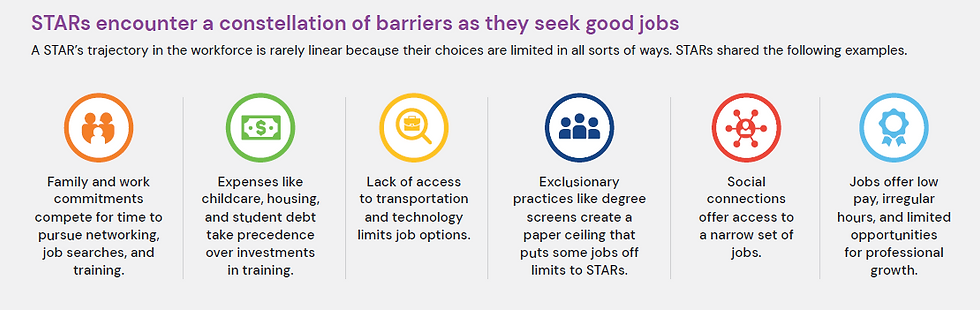
Pursuing economic opportunity from the bottom looking up inherently brings barriers that those at the top have the means to overcome. Any serious effort to improve the economic mobility for 70% of New Mexico’s adult population needs to consider these barriers that can hind progress. In general, the barriers include:
· Family influences
· Financial obligations
· Community networks
· Job supports, unstable hours
· Exclusive workplaces
· Limited access via transportation and technology
Improving the workforce outcomes for Northern New Mexico and the state as a whole needs to include more than just a training and hiring. We need to look at the system wholistically and on an individual level – helping one and many.


I appreciate how this article highlights that workforce barriers are often more complex than simply lacking education or training. Factors such as financial pressure, transportation, technology access, and limited support networks can significantly affect a person's ability to achieve economic mobility. This is why initiatives that promote economic independence can be especially meaningful in creating more accessible opportunities for individuals and communities.